
By Zohaib Nawaz3 min read
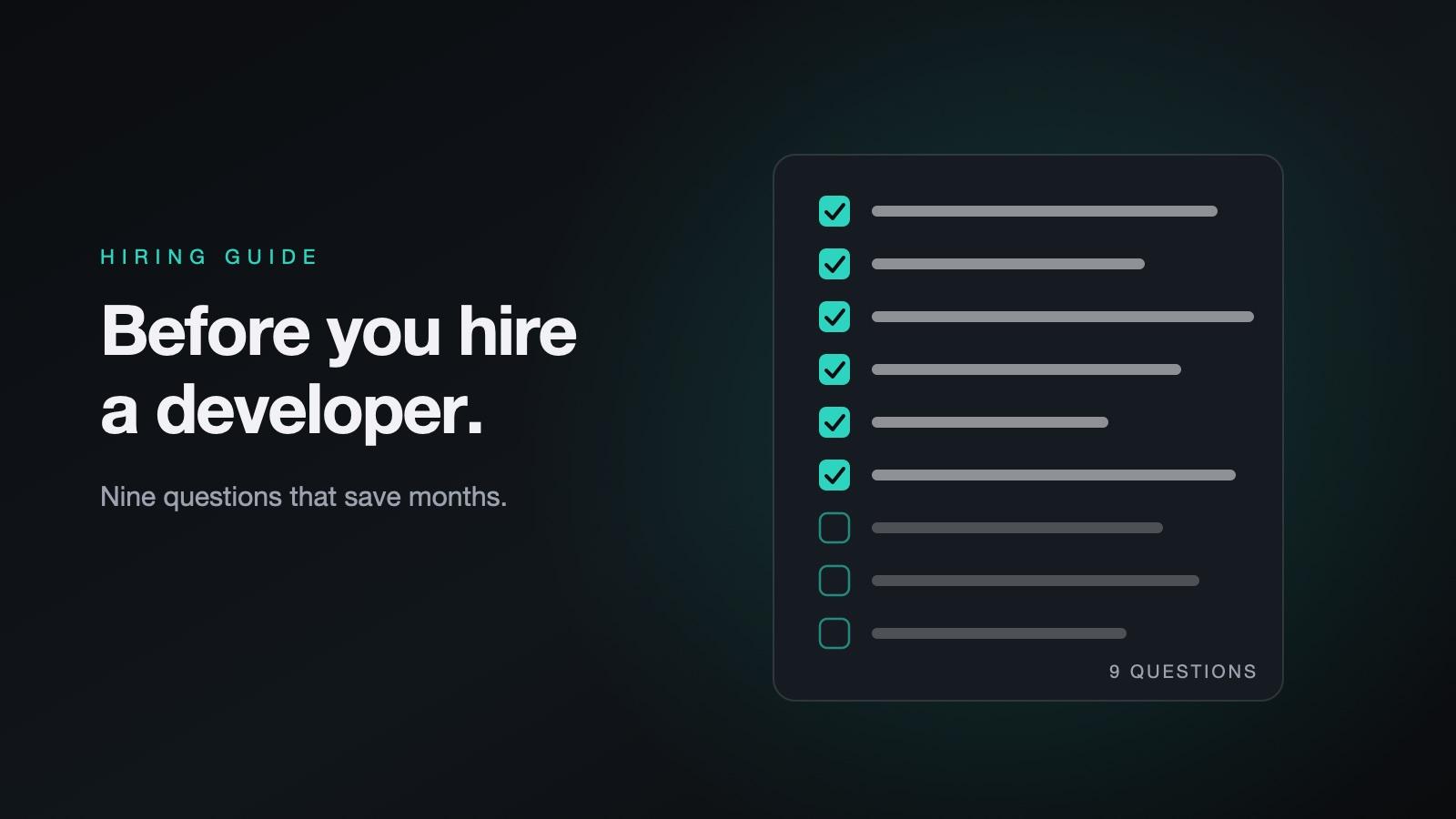
Before You Hire a Developer: 9 Questions That Save You Time and Money
The wrong developer rarely looks wrong at the start. These nine questions help you spot the difference early, so you pay for a product that works, not for an expensive lesson.
On this page
Hiring a developer is a leap of faith. You are paying someone to build something you cannot easily inspect, in a language you may not read, and you only find out whether it was a good decision months later.
Most projects that go wrong don't go wrong because of bad code. They go wrong because nobody agreed on what was being built, who owned what, or what would happen when something broke.
I am a developer, so yes, I have a bias. But these are the questions I would want a client to ask me, and the ones I would ask if I were hiring someone myself.
1. Can I see something similar you have built, live?
Screenshots are easy to make and easy to borrow. Ask for live links you can click, and for one or two projects explained in detail: what the problem was, what they decided and why.
A developer who can talk through their decisions understands their work. That is exactly why I keep detailed project write-ups instead of just a gallery of pictures.
2. How will we work together week to week?
Ask how often you will get updates, where you can see progress yourself (a test link you can open any time is ideal), and who you talk to when you have a question.
The warning sign is silence: three weeks of nothing, then a big reveal that isn't what you imagined. Small, regular check-ins are what keep a project on track.
3. What exactly is included, and what isn't?
Get the scope in writing: which pages or features, who writes the text, who provides the images, how many rounds of changes, and whether hosting, domain and email setup are part of it.
Most budget arguments happen because two people pictured two different things. A clear scope is cheaper than any contract dispute.
4. Who will own the code, the domain and the accounts?
This is the most important question on the list, and the one people forget. The domain should be registered in your name. The hosting, the code repository and the admin logins should be in accounts you control, or at least accounts you have full access to.
Too many businesses discover, years later, that they can't change a single line on their own website because everything lives in someone else's account.
If you don't own the domain and the code, you don't really own the website.
5. What happens if something breaks after launch?
Every website and app needs care after launch: updates, small fixes, new content, the occasional surprise. Ask whether there is a free fix period after launch, and what ongoing support looks like and costs.
Some clients prefer to call when they need something. Others like a monthly support plan so someone is already watching. Either is fine, as long as you know which one you have.
6. How will you make it fast, secure and easy to find?
A good developer answers this concretely, not with “don't worry about it”. Listen for things like image optimization and speed testing, keeping passwords and secret keys off the visitor's browser, regular backups, and basic search setup such as page titles and a sitemap.
You don't need to understand every detail. You need to hear that they have thought about it.
7. Can I update the content myself?
If you will want to change prices, add blog posts or swap photos, ask how you will do that, and whether you will get a short walkthrough. Paying a developer every time you fix a typo gets old fast.
8. How do you price, and when do I pay?
Hourly billing can work for open-ended work, but for a defined project it puts all the risk on you. I prefer fixed, scoped projects paid in milestones, so both sides know what they are getting and money moves as work is delivered.
Whatever the model, be careful with anyone who wants the full amount upfront before any work exists.
9. What do you need from me?
This one surprises people. Projects slip far more often while waiting on content, feedback and decisions than on code. A developer who asks for your text, your logo files and a decision-maker's time early is protecting your deadline.
Red flags worth walking away from
- They ask no questions about your business or your customers.
- They promise things nobody can promise, like “#1 on Google in 30 days”.
- They won't put the scope in writing.
- They want 100% payment upfront.
- They can't explain what they are doing in plain language.
None of these prove someone is dishonest. But each one makes a painful project more likely.
What good answers sound like
Good answers are specific and calm. They describe a process, not a promise. Mine follows five steps (discovery, architecture, development, refinement and launch), and you can read how each one works before we ever talk.
A developer who welcomes these questions is usually the one you want. A developer who gets defensive has already answered them.
Questions people ask
Should I hire a freelancer or an agency?
A freelancer usually means you work directly with the person building your product, which keeps communication simple and costs lower. An agency gives you more people and more cover for very large projects. For most websites, MVPs and focused apps, a good freelancer is enough.
Is it safe to hire a remote developer from another country?
Yes, if the basics are in place: a written scope, milestone payments, regular updates, and all accounts in your name. Ask about time zones and overlapping working hours too. I work remotely from Pakistan and always agree on a regular time to talk before a project starts.
How long does a typical business website take?
A focused business website often takes a few weeks, while a SaaS product or app usually takes longer. In practice the biggest variable is rarely the code. It is how quickly content, feedback and decisions arrive.